Our journey
How purepofo began
purepofo did not begin as a generic fintech idea. It emerged gradually from business lifecycle thinking, a growing concern for ethical investing, and the conviction that Halal-conscious investors needed a framework that could keep integrity, business quality, and future awareness together.
The idea that stayed
Business lifecycle thinking became the anchor because it connected how companies evolve with how investors should evaluate them over time.
An unexpected starting point
In 2013, an opportunity took me from Europe to Asia. At the time, stock investing was not part of the plan, and Halal investing was not yet a familiar field to me. What looked at first like a professional move would eventually become the beginning of a much longer journey.
That period created the conditions for a new question to grow. It was the first time business performance, long-term investing, and personal values started to move closer to each other rather than remaining separate interests.
The idea that changed everything
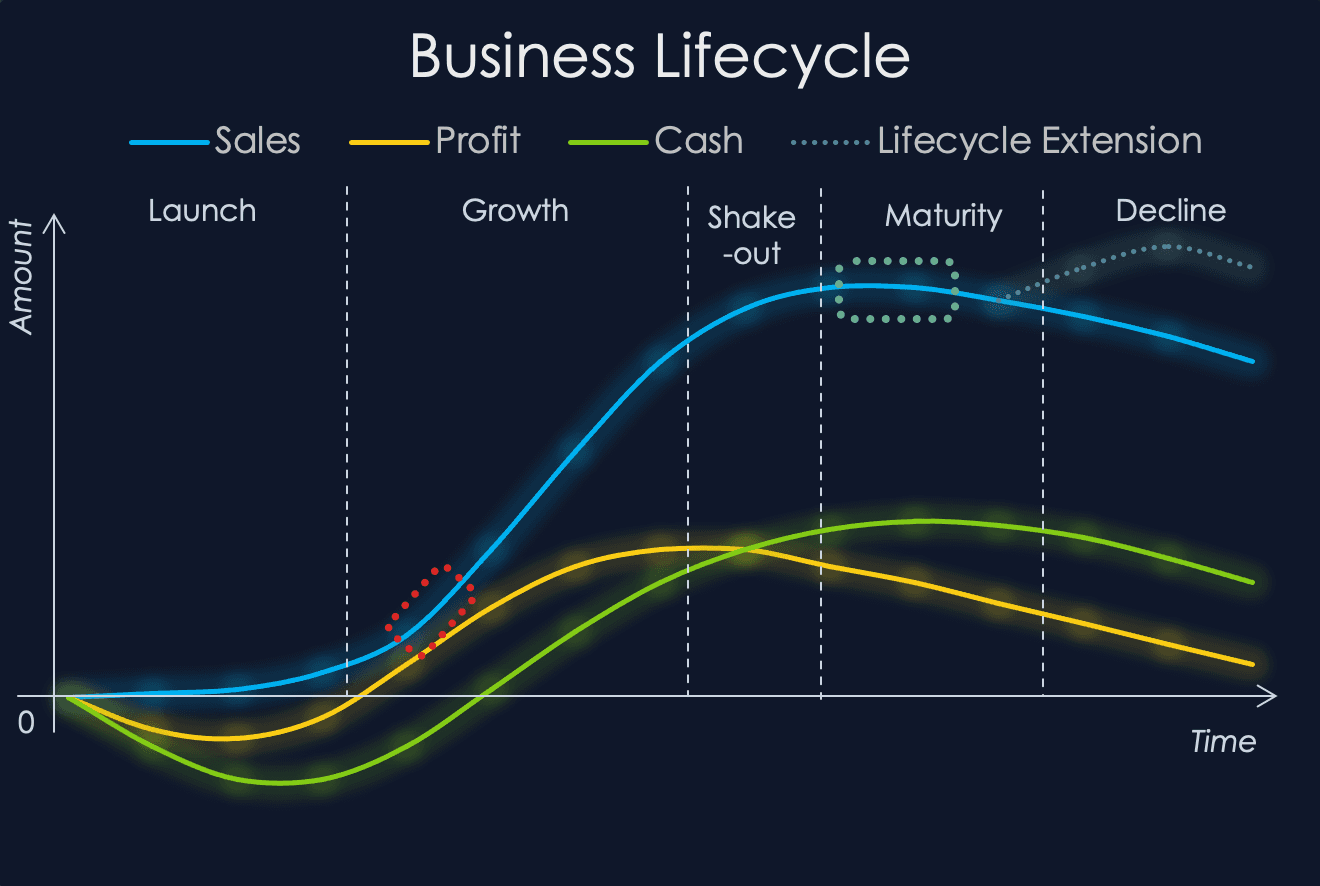
The turning point came during a training session called Financial Toolkit for Managers, led by Barry Johnson. I already knew the Business Lifecycle from a managerial perspective, but this time it was presented differently: as a framework for long-term stock investing.
That shift mattered. It reframed company evolution, not as an abstract management model, but as a practical way to understand why some businesses create enduring value while others fade, mature, or become fragile. The connection between corporate phases and stock performance suddenly became much more tangible.
When performance met ethics
One insight stayed with me: navigating the Business Lifecycle is not only a corporate imperative. It can also be the basis for better investing. But that raised another question for me: where do sustainable contributions and ethical responsibility fit into that picture?
A conversation over lunch helped sharpen that question. It encouraged me to think beyond pure performance and to explore whether financial strength, ethical integrity, and long-term societal value could be brought into one coherent investment process.
Building the first tools by hand
That curiosity turned into practical work. In the evenings and on weekends, I began building Excel-based tools to assess companies through both financial and ethical dimensions. With each iteration, the models became more thoughtful and more ambitious.
Over time, I expanded them to include sustainability considerations and broader assessment logic. My background in IT made it natural to combine data work, structured analysis, and technical experimentation. What began as manual exploration slowly became a deeper analytical framework.
Why existing tools were not enough
The deeper I moved into Halal investing, the clearer the gap became. Halal screening dramatically reduces the eligible stock universe, and balancing strict compliance with real performance objectives is far from simple. In many cases, the available tools did not offer the depth, transparency, or sophistication needed for that challenge.
At the same time, Environmental, Social, and Governance thinking was becoming more visible in the wider investing landscape. That made the opportunity even more interesting: could Halal-conscious investors have access to a framework that respected Shariah discipline while still supporting stronger long-term stock selection?
The Question
How can we build a sustainable, Halal-compliant portfolio with the highest potential for long-term value and performance?
From private models to a public platform
By 2022, the analytical tools I had built over the years had proven useful in my own portfolio work. That created a new realization: these models could be meaningful not only for one investor, but for a broader community of values-conscious investors.
Turning that realization into a platform required more work, refinement, and testing. purepofo emerged from that process as a research platform designed to bring together Shariah compliance, sustainability awareness, business-quality analysis, and future-aware investing logic.
It was important that purepofo did not simply copy existing screening models. The platform was built around proprietary metrics and their combinations, then strengthened further through AI and machine learning so that raw financial statements and related data could be translated into more actionable research.
The deeper the work became, the clearer one limitation appeared: current-state screening could show where a stock stood now, but not whether that position looked stable. If Halal compliance often changes as a by-product of broader financing and operating decisions, then those shifts might be anticipated from recurring financial patterns. That question became one of the foundations of purepofo’s machine-learning work.
But anticipating a compliance shift was only part of the investor problem. An investor still needs to decide when to hold, reduce, rotate, or exit a position. That is why purepofo also developed a wider framework around intrinsic value, business lifecycle, and changing growth, maturity, and resilience profiles.
Independent Recognition
The work gained both academic and industry recognition
The work behind purepofo received recognition in two different ways: through academic publication in the European Journal of Islamic Finance, and through industry recognition from Wealth & Finance International, which named purepofo Best Emerging Halal Investment Research Platform 2026.
Together, they reinforce that the platform is not only a product idea, but a developed research direction.
What this journey means today
purepofo exists because I believed Halal-conscious investors deserved more than a static label, a narrow stock list, or a tool that asked them to choose between ethics and performance thinking.
Today, purepofo brings those strands together in one system: recognized Halal methodology, machine-learning-supported foresight, deeper company analysis, and practical investor workflow. The aim is not to make investing simpler by hiding complexity. It is to make disciplined decisions more possible for investors who need both integrity and performance awareness.
Dr. Hazem Hamoudia
purepofo
Continue from the journey into the framework
If you want to see how this journey becomes a practical research method, continue into the insights pages or answer the 4 investor-profile questions.

powered by innovation.
© 2026 purepofo.
All rights reserved.
Follow us on
