NVIDIA Corporation (NVDA): Growth-Driven Returns with Elevated Valuation Sensitivity.
A Factor-Based Review of Growth Persistence and Valuation Risk Under Terminal-Value Compression Risk.
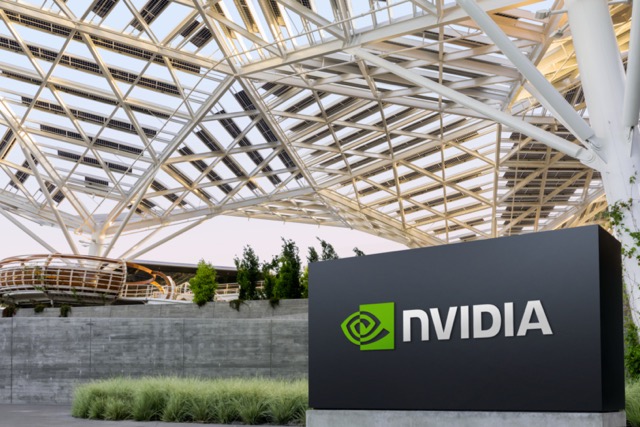
Return outcomes are primarily driven by growth execution rather than structural defensiveness. Exposure is best framed as tactical rather than structural, with allocation size reflecting limited downside buffers and sensitivity to sentiment shifts.
Jump directly to the part of the review you care about most, from compliance and business quality to valuation, risks, and the final synthesis.
NVIDIA Corporation’s return profile remains heavily reliant on growth execution, with valuation sensitivity, reflecting elevated valuation multiples that assume sustained AI infrastructure hypergrowth and limited margin normalization. NVIDIA Corporation is assessed as Halal-compliant, while maintaining structural compliance visibility. The business profile reflects robust expansion dynamics alongside emerging operational stability, positioning the company earlier in the business lifecycle rather than in a mature defensive phase. Structural downside mitigation appears insufficient, driven by weakness in cash cycle strength. Valuation analysis points to material divergence across intrinsic value estimates, highlighting assumption sensitivity. The profile supports selective growth exposure rather than core defensive allocation.
How to think about stocks
Get occasional insight on how to evaluate stocks, not just what stock to look at next. We write when there is something genuinely useful to add.
By subscribing, you agree to receive this optional email and can withdraw consent later. Read the privacy policy.
Company Overview
Nvidia Corporation is an American multinational technology company incorporated in Delaware and based in Santa Clara, California. It designs graphics processing units (GPUs) for the gaming and professional markets, as well as system on a chip units (SoCs) for the mobile computing and automotive market. Nvidia's broader market environment introduces sensitivity to supply-chain concentration, reflecting dependence on a single advanced-node foundry for leading-edge chip fabrication.
As of the latest reporting period, NVIDIA Corporation (NVDA) maintains a market capitalization of 4425.5B USD, reflecting its positioning along a growth-oriented trajectory. Earnings and cash flow patterns indicate expanding operational scale and reinvestment capacity, consistent with a growth-oriented capital allocation posture, with core earnings dependence on product dependency (heavy revenue concentration in data-center GPUs and tightly coupled platform ecosystems).
Halal (Shariah) Compliance
Under prevailing Shariah screening criteria, NVIDIA Corporation qualifies as Halal-compliant. This conclusion reflects AAOIFI-based review of revenue permissibility and financial threshold compliance. NVDA operates in a Halal-compliant industry. The interest income ratio stands at 1.07%, comfortably within the acceptable limit of 5%. The interest-bearing debts ratio amounts to 0.25%, well below the acceptable limit of 30%. Also, the liquid assets ratio is recorded at 1.08%, significantly below the acceptable limit of 30%.
To support long-term portfolio construction and reduce forced divestment risk, purepofo evaluates forward Halal compliance dynamics using predictive analytics rather than relying solely on past status. For NVIDIA Corporation, forward compliance probability remains high, with historical financial screening remaining consistently Halal compliant over the last up to 15 years.
Halal compliance assessments reflect available data at the time of writing and are subject to revision as financial structures or business activities change.
Ethical Preference (ESG & Values-Based Overlays)
This section outlines ethical preference signals, including ESG-related indicators, that some investors may consider alongside Halal-compliant investments. These considerations are values-based and discretionary, and should be clearly distinguished from jurisprudential Shariah compliance determinations.
NVDA's ESG performance is mixed relative to peers, with strengths and weaknesses across rating frameworks. purepofo evaluates ESG standing using a dual framework combining third-party ESG scores and systematic controversy screening. Beyond formal Shariah and ESG screening, NVIDIA Corporation exhibits potential exposure to ESG controversy, which may influence mandate eligibility for ethically constrained investors.
Business Positioning
NVIDIA Corporation demonstrates broadly constructive growth dynamics, underpinned by several reinforcing drivers. Market expansion is being driven by renewed acceleration (revenue acceleration ≈ 0.39), reinforcing the current growth trajectory. Valuation momentum is supported by strengthening earnings expectations, reinforcing positive market re-rating dynamics. Reinvestment capacity is supported by accelerating cash generation, enhancing strategic flexibility.
The company exhibits moderate maturity, supported by certain stabilizing elements but not yet uniformly across the profile. Profit stability shows gradual improvement, suggesting improving earnings quality. Cash flows demonstrate structural stability, supported by a strong consistency profile (stability ratio ≈ 0.95) and slightly improving trend, reinforcing earnings reliability and downside protection. Risk-adjusted returns remain weak, reflecting limited investment efficiency, with inconsistent performance (Sharpe consistency factor ≈ 0.52).
Resilience foundations provide limited downside insulation under stress. Cash Cycle Strength emerges as a key area extended, tying up capital in operations (median cycle ≈ 101 days). Equity Discipline also reflects dilution risk, potentially eroding shareholder value.
The company exhibits a compound positioning, where growth opportunities are supported by an emerging foundation of durability. Aggregate growth indicators reinforce confidence in continued expansion under normal operating conditions. Maturity offers selective stabilization, supporting continuity under normal conditions though not full late-cycle defensiveness. Limited resilience heightens exposure under stressed conditions. While competitive positioning is intact, execution outcomes remain influenced by product dependency, reflecting heavy revenue concentration in data-center GPUs and tightly coupled platform ecosystems.
Investment Prospects
NVIDIA Corporation demonstrates notable investment strengths. The interest coverage is assessed as strong, supported by consistent structural resilience in annual interest coverage ratios. Based on annual revenues, NVDA shows a strong market expansion. Overall, NVDA exhibits a strong reinvestment capacity based on available data. These highlights reflect NVIDIA Corporation's top three performance indicators.
From a market perspective, NVDA's cash cycle strength appears weak, with limited structural resilience evident in cash conversion cycle (ccc). Overall, NVDA shows a weak equity discipline, underpinned by limited structural resilience in annual equity dilution rate. Overall, NVDA shows a moderate liquidity position, underpinned by limited structural resilience in annual current ratios. These represent areas that warrant closer monitoring.
The last recorded analyst expectations exhibit moderate dispersion across analyst views for the upcoming fiscal period. NVIDIA Corporation’s revenue outlook for the next fiscal year ranges between 226.2B USD and 412.5B USD, with a consensus estimate near 316.1B USD, based on multiple analyst forecasts. Earnings projections imply an expected EPS range from 4.91 to 9.56 USD, with a mean forecast of approximately 7.46 USD. Taken together, analyst forecasts suggest a broadly constructive outlook, though meaningful variation across assumptions warrants scenario-based interpretation rather than point reliance.
NVIDIA Corporation’s return profile is anchored in medium-term performance, with a rolling five-year ROI of 1179.8%. While medium-term returns are exceptional, they reflect a growth-led expansion phase amplified by valuation re-rating rather than a steady-state compounding profile. Short-term returns over the last year reached 60.9%, reflecting elevated momentum. Recent gains reflect a high-quality execution phase, though supported by favorable market conditions. Cumulative returns remain substantial, providing historical context. Risk-adjusted performance is reflected in a Sharpe ratio of 1.65. The company maintains a modest dividend of 0.04 USD per share, signaling shareholder participation rather than income orientation. Dividend reliability is assessed as high, based on the stock’s historical payout behavior.
From a multi-model valuation perspective, NVIDIA Corporation exhibits valuation that indicates downside risk across most methodologies, relative to a current market price of 183.91 USD. Under a conservative discounted cash flow framework, intrinsic value is estimated at 43.86 USD, implying substantial downside under conservative assumptions. This outcome is highly sensitive to long-term growth and cost-of-capital assumptions. Applying a price-to-earnings growth perspective, the PEG model points to an intrinsic value of 119.50 USD, implying potential downside of 35.0%. Across methodologies, intrinsic value estimates span from 43.86 to 119.50 USD, reflecting a wide valuation range across models. In ultra-growth profiles, discounted cash flow models calibrated for long-term normalization often yield materially lower valuations, reflecting terminal value compression and high sensitivity to discount and reinvestment assumptions. NVIDIA Corporation valuation outcomes are primarily driven by growth persistence assumptions rather than near-term execution risk, highlighting the importance of interpreting implied upside or downside within an assumption-aware framework.
Summary
Taken together, NVIDIA Corporation maintains compliant Halal status but remains constrained by weak maturity or limited downside resilience. As a result, return outcomes are primarily driven by growth execution and valuation assumptions rather than structural defensiveness. The profile favors selective upside exposure while warranting heightened risk awareness. The risk–return profile continues to hinge on valuation sensitivity, reflecting elevated valuation multiples that assume sustained AI infrastructure hypergrowth and limited margin normalization.
Exposure is best framed as tactical rather than structural, with allocation size reflecting limited downside buffers and sensitivity to sentiment shifts.
Connect this company review back to the broader purepofo research workflow, from methodology and predictive insight to screening and more published examples.
This article is provided for informational and educational purposes only. It does not constitute investment, legal, tax, Shariah, or other professional advice, and it is not a recommendation or solicitation to buy, sell, or hold any security. The content is general in nature, is not tailored to your personal circumstances or objectives, and should not be relied on as the sole basis for any investment decision.
Halal assessments, ratings, forecasts, and classifications reflect purepofo's methodology at the time of publication. They may change as company fundamentals, market data, methodology inputs, AAOIFI-based screening interpretations, or other information change. Proprietary scores and forward-looking assessments are inherently uncertain and are not guaranteed to be accurate, complete, or timely.
Third-party data may be used. purepofo does not guarantee the accuracy, completeness, or timeliness of third-party information and is not responsible for errors, omissions, or content provided by others. Logos and trademarks remain the property of their respective owners and are used for identification only.
You should carry out your own research and, where appropriate, consult qualified financial, legal, tax, and Shariah advisers before making any decision. Please also review our Terms and Conditions.

powered by innovation.
© 2026 purepofo.
All rights reserved.
Follow us on
